Retreat Facilitation and Keynote Speaking
Banff Executive Leadership facilitated strategic retreats and keynote work, including experiential use of the Canadian Rockies setting.
Alongside its programmes, Banff Executive Leadership Inc. facilitated strategic retreats for boards and executive teams and delivered keynote sessions on governance and leadership. The practice used this approach. The practice no longer offers facilitation.
Where the work happened
Retreats and keynotes were delivered in two settings. The first was on site, in the client's own region, wherever the board or executive team was based. The second was in Banff and the surrounding Canadian Rockies, which is where the practice itself was founded and where a good deal of its distinctive material came from.
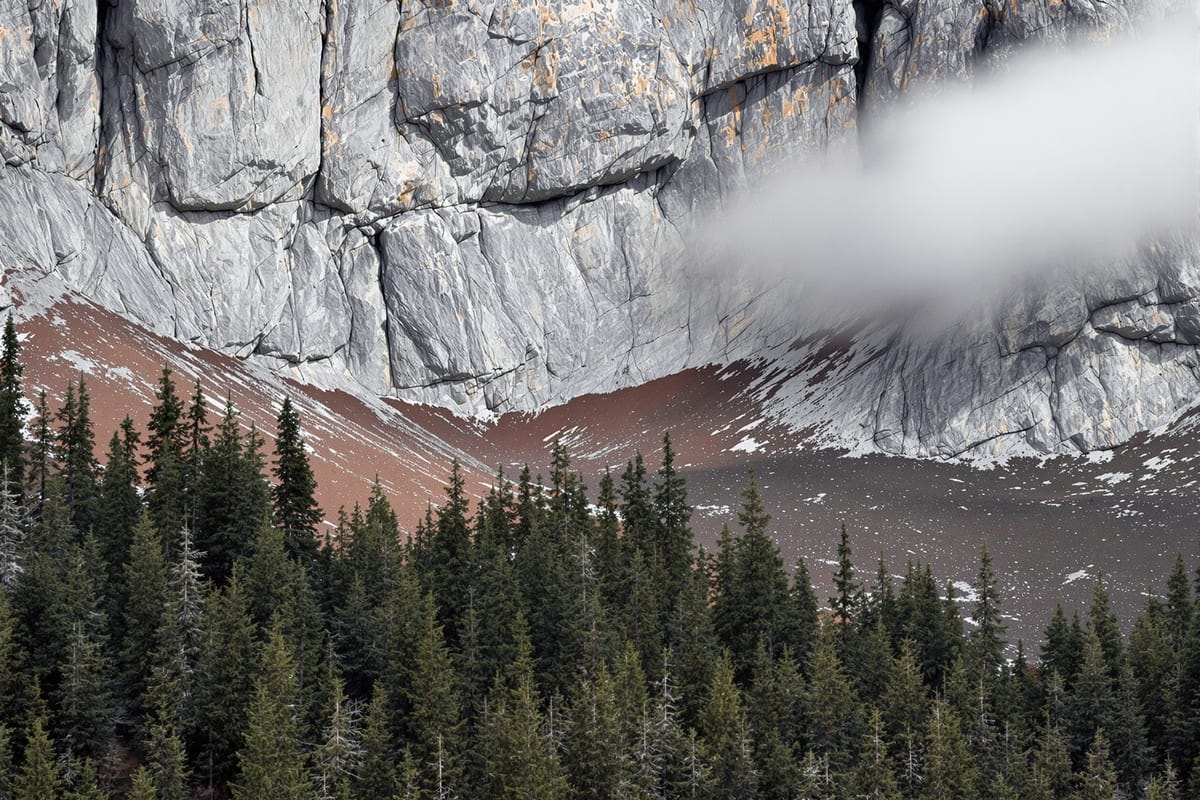
Both had their uses, and the practice was clear-eyed about the difference between them.
Why moving a group out of its own building changes the conversation
It is easy to be cynical about the off-site, and much of the cynicism is earned. But the effect is real, and the reasons for it are structural rather than atmospheric.
A group meeting in its own building meets inside its own hierarchy. The room has a head of the table because someone's office is down the corridor. The agenda is the standing agenda, because the standing agenda is what that room is for. Interruption is legitimate: a message comes in, someone steps out for twenty minutes, and the discussion that was starting to get somewhere does not resume. Above all, the conversation is bounded by what is operationally in front of the group, because the operations are physically in front of them.
Removing the group changes each of those conditions at once. The hierarchy is not abolished, but it loses its architecture. Interruption becomes visible and therefore costly, which is most of what makes sustained attention possible. And a group that has travelled together has, whether or not anyone says so, licensed a different kind of discussion: about direction rather than delivery, about whether the current strategy is still the right one rather than how far behind it is, and occasionally about things the group has been avoiding for two years. Those conversations are not more likely off site because the scenery is pleasant. They are more likely because the ordinary reasons for not having them have been temporarily removed.
The facilitator's job in that window is unglamorous: to keep the discussion at the level the group came for, to prevent the retreat collapsing back into a long operations meeting, and to ensure that what is agreed survives the return journey.
The setting used experientially
The Banff sessions went further than a change of room. The practice used the natural environment itself as part of the method, running outdoor challenge and applied sessions in the mountain landscape to develop empowerment, teamwork, collaboration and problem-solving. The argument for it is straightforward: a group's real decision-making habits, who defers to whom, who is heard, how risk is weighed, how the group behaves when a plan stops working, are far more visible in an unfamiliar physical task than in a discussion of the same behaviours, and they are far harder to perform. What the landscape supplies is a genuinely uncontrolled problem, which is something no case study can manufacture. The surrounding terrain of Banff National Park, administered by Parks Canada, was the setting for much of that work.
Artists and the innovation sessions
The creativity and innovation work took a related approach by a different route. The practice engaged local artists, working musicians, painters and improvisational performers among them, to run hands-on sessions with executive participants. The purpose was not recreation and not metaphor. It was that creative disciplines have worked out, over a very long period, how to produce usable material under constraint, how to make a first attempt without defending it, and how to keep going once the first idea has failed. Senior executives are generally excellent at judgement and evaluation, which is what promotion selects for, and correspondingly out of practice at generation. An afternoon spent being visibly bad at something in front of peers restores a capacity that a lecture on innovation cannot.
Keynotes
Keynote sessions covered the same subject matter as the practice's writing: leading in a networked world, improving board governance effectiveness, strategic planning and competency mapping, creativity and innovation, and communication in volatile conditions. They were delivered at conferences and association meetings and, frequently, as the opening session of a client's own retreat, where the purpose was to set a frame for the two days that followed rather than to conclude anything.
Leadership Acumen sets out the arguments behind this approach in full. The programme catalogue is on the programmes page, and the executive development work the retreats drew on is described on the executive leadership page.